

[Originally published Nov 14, 2025]
Kaya's story is vivid, inspiring, and full of life. Paying members of Greenway Gear Collective will be able to read the full article, including the details about the Portugal trip. Please consider joining as a paid member; it helps the GGC team continue to inspire more people into biking and sustainable living through efforts like Bike Academy, advocacy support, and stories like this. It takes time to interview, write, and edit. Your contributions help make it happen!
Cameron: First off, thank you for doing this. For folks who have not met you yet, can you introduce yourself and share how you ended up in Raleigh - and eventually on a bike?
Kaya: Yeah, absolutely. I am Kaya. I spent about five years in Raleigh before I technically “moved away” this past July, when my lease ended. Even though I do not have a permanent address here right now, I still think of Raleigh as my home base. That is why I am back in town for a while.
When I first got here, I was doing in-person coaching. Eventually I shifted into working as a remote, online personal trainer. It actually took me a long time to find my place in the community. Once I did, though, I realized how special this city is. That sense of community is what eventually led me to bikes.
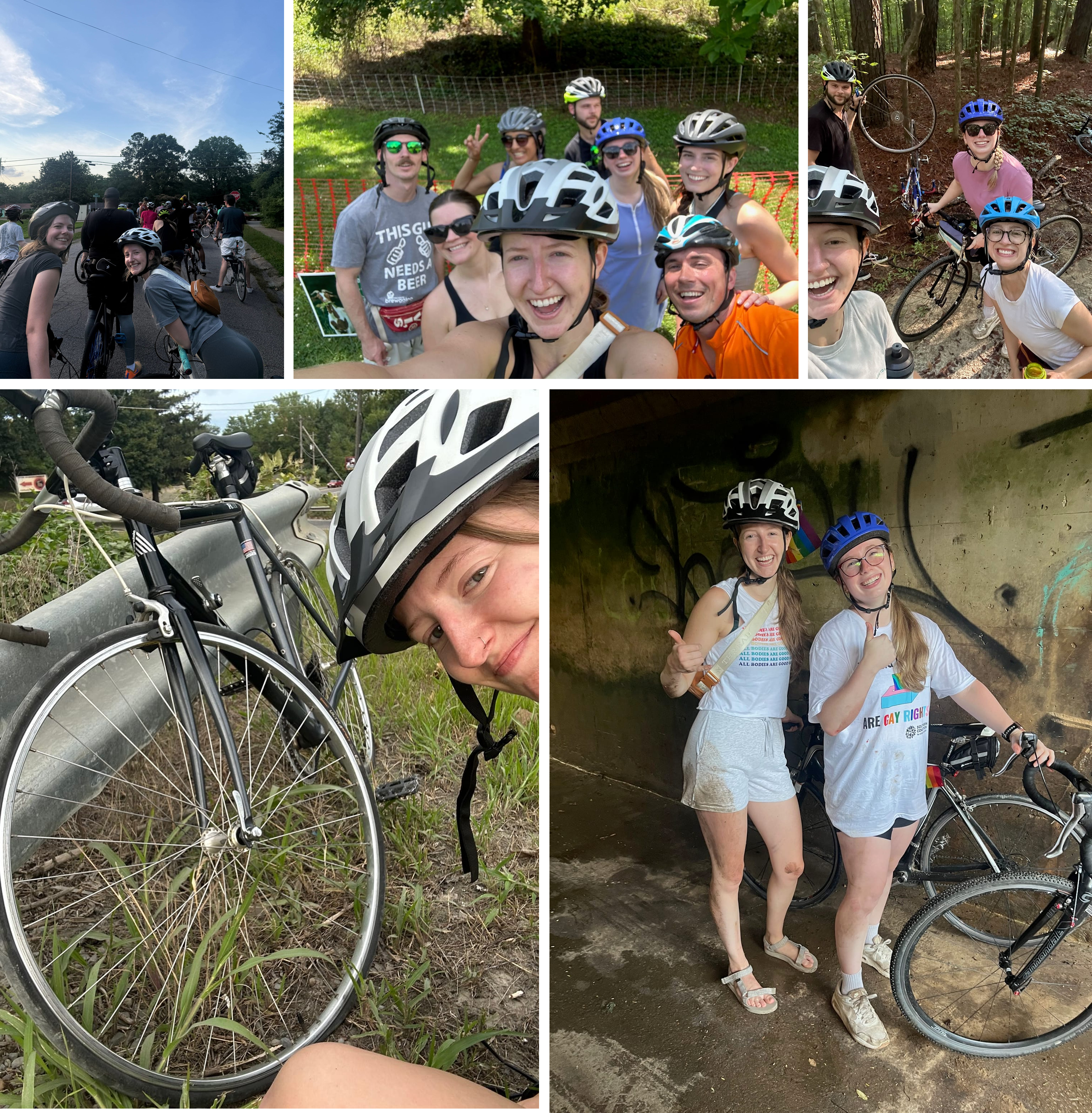
This past year, through friends of friends, I met you and Lauren, and that spiraled into meeting Mia and Thomas and Ashley and Jens and so many others. I remember telling everyone at the beginning, “I don’t ride bikes. I don’t do that.” But I also kept saying, “I can feel myself getting sucked into the bike vortex.” It was clear foreshadowing. Not long after that I was riding bikes, joining group rides, crashing bikes, showing up at The Bike Library events - and it all happened very fast.
From team sports to exercise science
Cameron: Where did you go to school, and how did fitness become such a big part of your life?
Kaya: I grew up and went to school in upstate New York. I graduated from the University at Buffalo with a degree in exercise science. It is part of the SUNY system - State University of New York.
I actually started my undergrad on the pre-med track. At some point I realized that I was much more interested in preventing health issues than treating them after the fact. That is what pulled me toward exercise science and health promotion. That path led me into personal training, and eventually into yoga. I did my yoga teacher training, became a certified yoga instructor, and taught classes here in Raleigh as well. All of that - the coaching, the strength training, the yoga - sort of blended into the approach I have now.
Cameron: Growing up, what did “fitness” look like for you? How did you move as a kid and teenager?
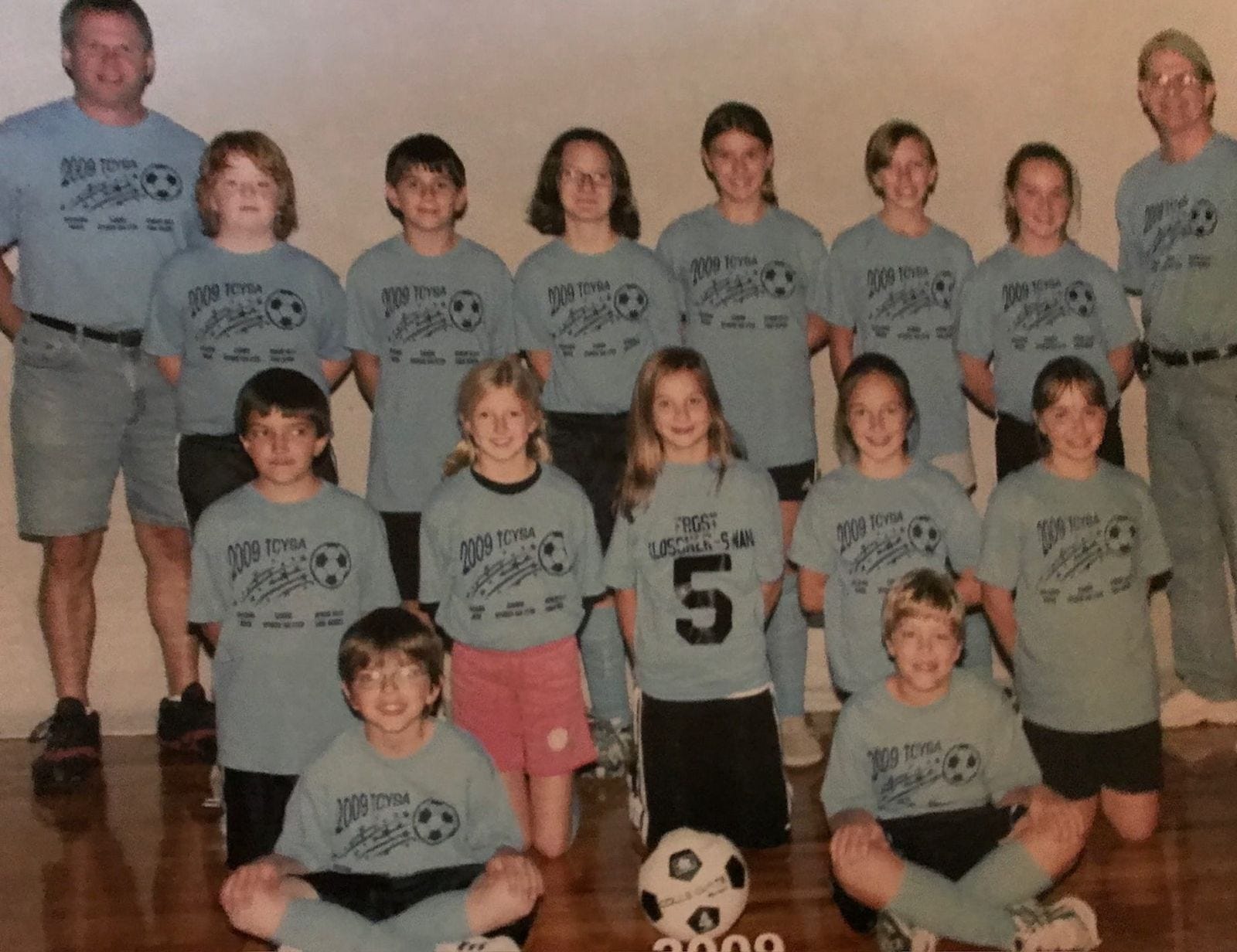
Kaya: I played sports all through elementary, middle, and high school. Soccer was my main sport, but I also ran track, played tennis, and tried volleyball and basketball.
The interesting part is that I was always pretty averse to competition. I got really anxious around it, but it was socially important. All my friends played sports. My parents were also very adamant that my brother and I stay active, so it just felt normal that I would be doing something athletic.
That stayed true up through high school. It was not until college that my idea of fitness shifted away from organized sports.
Discovering lifting - and a different kind of discipline
Cameron: What did your fitness life look like in college if you were not chasing team sports anymore?
Kaya: College is when I realized that I was not actually interested in competitive sport itself. What I did like was the idea of becoming the healthiest version of myself. That mindset brought me into lifting.
I started strength training in the campus gym. Through social media and what I was learning in class, I realized that lifting was a very accessible way to move my body. I could go by myself, follow a plan, and really see changes over time.
It became this ongoing experiment. I was learning how my body responded to different movements and loads. It was my first real introduction to discipline in a physical context - putting myself in uncomfortable situations on purpose and seeing what happened.
For a long time that environment fit my personality. I am more introverted by nature, so I liked the “headphones on, block out the world, follow the program, dial in technique” vibe. It was solo, inside, structured, and controlled. That was very me for those years.
Leaving the comfort of structure
Cameron: You mentioned you are “branching away” from that version of yourself. What do you mean by that, and how do bikes fit into the picture?
Kaya: The relationship with the bike is interesting. When I think about where it really started, my mind goes to a random YouTube video. It was a solo female bikepacker riding along the coast of Iceland, and she made a mini-documentary about the trip.
I watched it and thought, “Wow, I would love to be able to do something like that.” That idea settled into the back of my mind like a tiny seed. At the time, the distance between who I was and that version of myself felt massive. I could not even picture it as a real possibility. The idea of riding a bike alone, loaded up, in some faraway place was honestly pretty intimidating.
That part is funny to admit because I work as a fitness coach. I encourage people to step into new movements and challenges all the time, so it felt almost hypocritical to say, “This scares me.” But that fear actually helps me be a better coach, because I remember exactly what it feels like to stand at the edge of something that seems too big.
For a while, the bikepacking dream stayed a “maybe someday” idea. No plan, no timeline, just a vague “that would be cool.” The thing that finally nudged me into biking at all was friends.
One day my friend Tanner said, “Let’s go for a bike ride.” And I said yes.
We went out, and I was like, “Whoa, this is awesome.” You can get so far with just your own two legs. You see your city in a completely different way. And it was not as hard as my brain had convinced me it would be. I felt pretty hooked after that.
Crank Arm, Critical Mass, and the magic of community
Cameron: So Tanner takes you out on this first ride, you get hooked. What happens in the next month or so?
Kaya: I started telling people, “I rode a bike for the first time.” The response I got was basically, “Great. Come on the next group ride.”
So I went back to Tanner and said, “Can I borrow your bike again?” My first group ride was Crank Arm. That ride took everything I liked about that first solo ride and multiplied it. The distance, the feeling of movement, the city at a different scale - and then you add this layer of social energy.
All these people show up, just to ride together, on a random evening. That was huge for me.
Right after that I did a Critical Mass ride. Same thing: lots of people, so many different types of bikes and riders, music playing, people being fully themselves. Those rides happened at the same time that my appreciation for community was really maturing. My “bike journey” and my “community journey” were on parallel tracks, and they started to feed each other in a way that blew my world open.
The Swift Campout leap
Cameron: At that point you still knew you were leaving Raleigh soon. How did that affect what you decided to do next on the bike?
Kaya: I knew I was moving at the end of the summer, so I did not rush out to buy a bike. I did not sign up for a race or a big training plan. I just thought, “Let me say yes to whatever I can before I leave.”
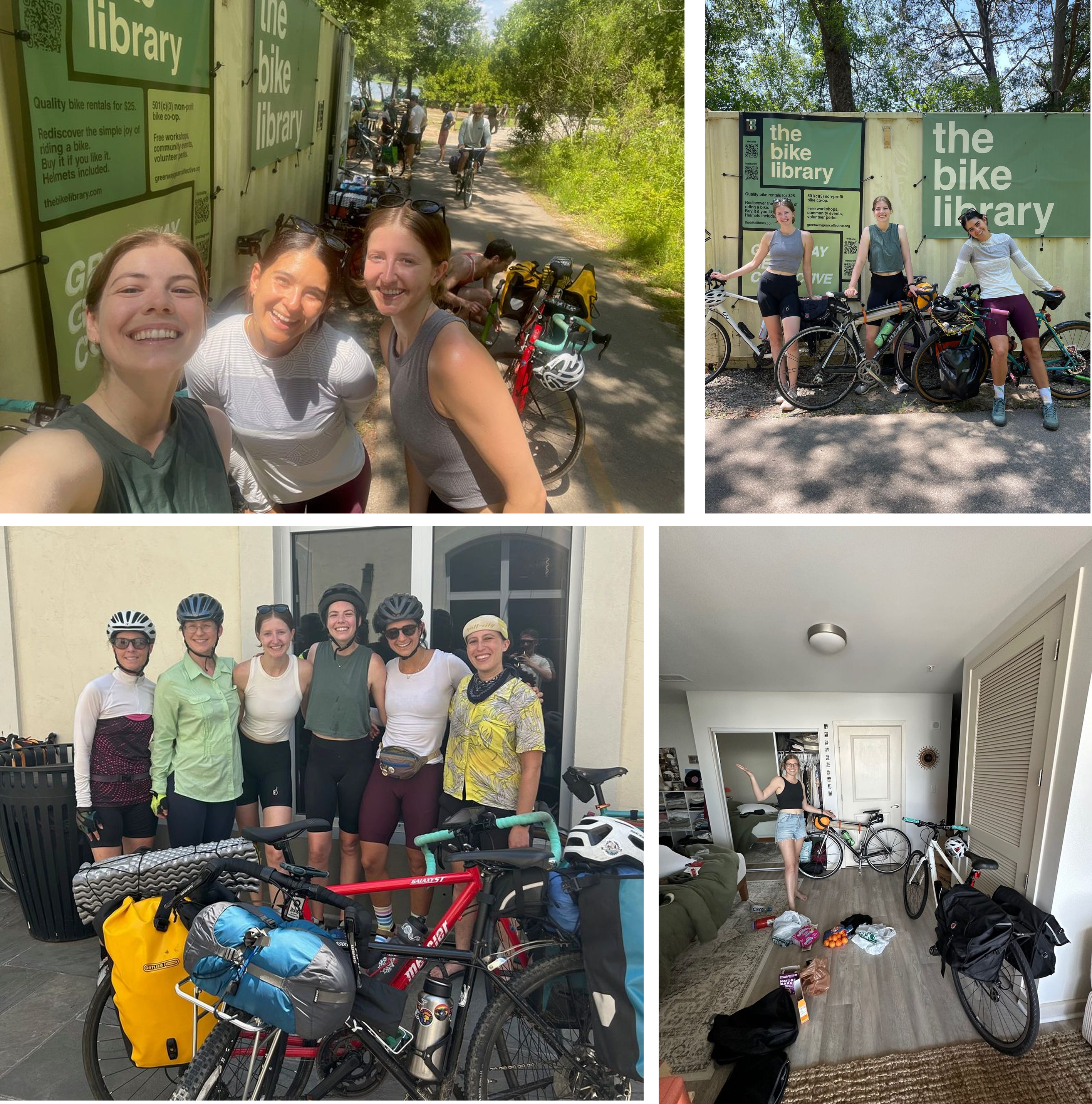
Then I heard about the summer solstice Swift Campout bikepacking trip. As soon as I heard the details, I knew I had to do it. It triggered that old Iceland bikepacking seed in my head.
It was a few weeks before I was leaving Raleigh. The idea of biking to a campsite with friends, camping out, and riding back the next day felt like the perfect bridge between that dormant dream and my current life.
I was nervous, though. It was a big jump for me.
Cameron: For readers who were not on that trip, can you lay out the basics? How long was it, where did you go, what did you have to do to get ready?
Kaya: The route was about 60 miles total. We rode roughly 40 miles the first day, then 20 miles back the second day. At that point, the longest ride I had ever done was around 15 miles. So the first day alone was almost three times my longest ride.
We rode out to Falls Lake, camped overnight, swam, ate, slept, and then rode back the next morning. There were maybe 15 to 20 people on the trip, and almost everyone had more riding experience than I did.
My friend Regan came too. She had slightly more experience than me, and we really teamed up mentally for that weekend. We basically said, “We are going to do this,” and then we committed.
I was nervous about the distance. I was nervous about keeping up. I was nervous about doing something that felt “too big” in front of people who knew what they were doing.
Learning to keep pedaling
Cameron: You did not just survive that trip. You rode really strong, on a brutally hot weekend. From the outside it looked almost effortless. How did it feel from the inside?
Kaya: I appreciate that. All the ingredients were there to make it difficult - the heat, the distance, my inexperience. My base fitness definitely helped. Years of lifting and movement gave me a foundation I could rely on.
But the biggest thing I took from that trip was mental. I discovered how powerful my mind is when I am right up against my edge.
On almost every significant hill, I would look up and think, “I cannot get up this. I literally cannot turn my legs over one more time.” And then my legs would go around again. And again. And again.
Eventually I would be at the top of the hill with everyone else.
On paper, that might sound small. To me it was huge. I have spent most of my life backing away from situations where I might hit my limit. Suddenly I was living inside one of those situations and choosing to stay. The reward on the other side was enormous.
That trip gave me a new internal voice. She was born on those hills. She says, “Just keep pedaling.” That voice has been very important to me ever since.
Planting Portugal in the middle of it all
Cameron: Fast forward a bit. Somewhere in here, you decide to go ride your bike across a foreign country. How did we get from Falls Lake to Portugal?
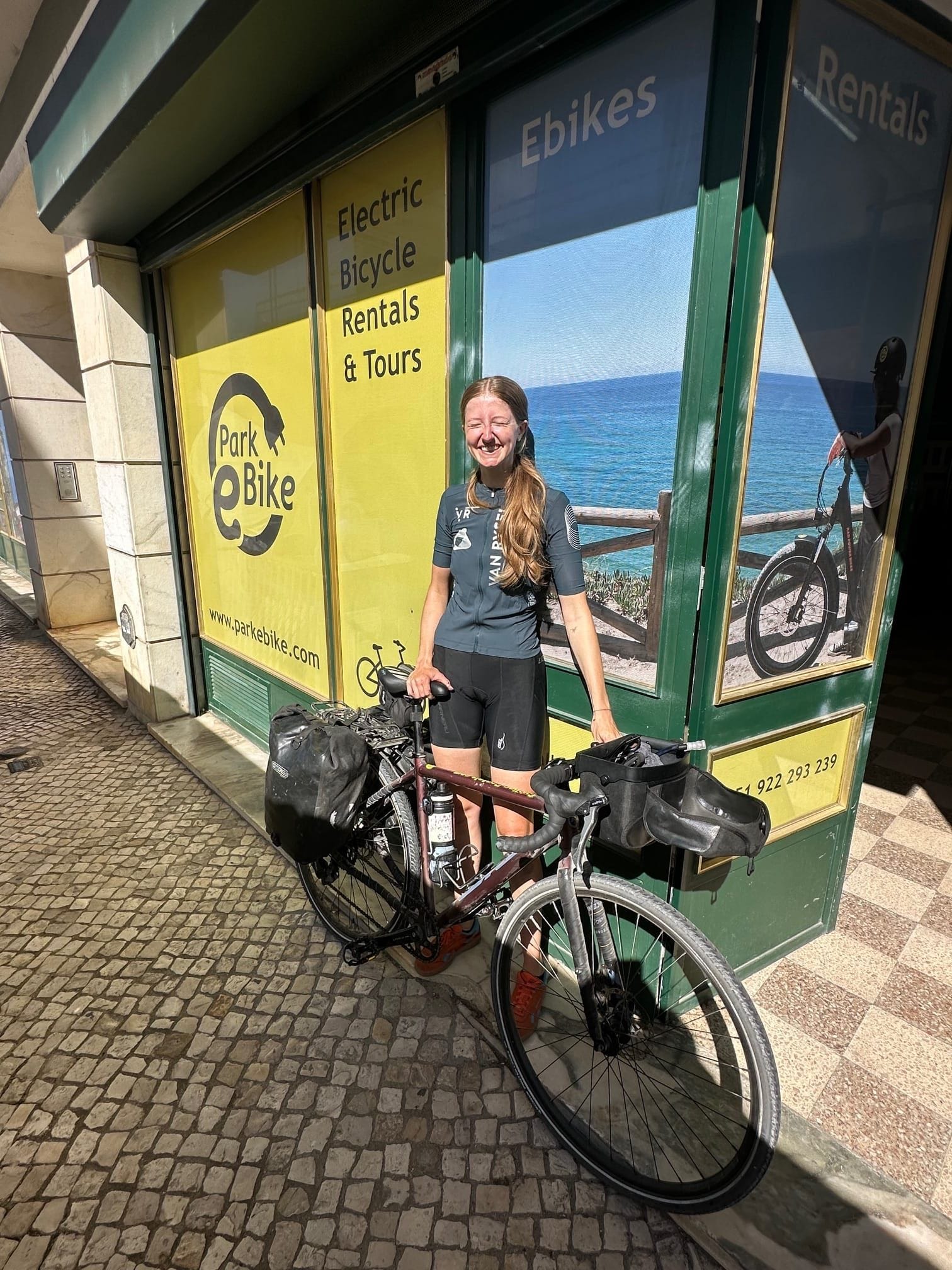
Kaya: About a week before this conversation I got back to Raleigh from a two-month stint in Portugal.
I started planning the trip in February. It is November now. By that point, I knew my Raleigh lease would end in July. I wanted to do some longer term travel and just needed to pick a place. I landed on Portugal before I ever considered biking there.
Then bikes entered my life. The Swift Campout happened. That little Iceland seed started to sprout.
While I was figuring out my Portugal itinerary, I realized that at some point I would need to get from the northern part of the country to the southern part. One day the idea popped into my head: “What if I ride a bike instead of taking a bus or train?”
That is when I started asking around. I asked you. I asked Lauren. I asked a family member who has bikepacking experience. I floated questions like, “What is it like to ride 250 to 500 miles?” and “How hard is that really?”
Somewhere in that process - I cannot pinpoint exactly where - the idea turned into a decision. I decided I would ride from Porto to Lisbon.
Planning a big ride without owning a bike
Cameron: Once you committed, how did you go from “big idea” to something you could actually do, especially without owning a bike?
Kaya: I went all in on research. I looked up routes, watched videos, and searched for stories from people who had ridden in Portugal, especially between Porto and Lisbon. I needed to know what I was getting into.
There was also the gear problem. At that point I still did not own a bike. I remember you telling me that your number one piece of advice was to ride your own bike on a trip like this. I agreed completely, but it was not an option for me.
So I looked for a workaround.
I found a rental company that would drop a bike off with me in Porto and pick it up in Lisbon. That solved the biggest logistical hurdle. They provided the bike, the panniers, the safety gear, and all the basic setup so I did not have to source it all once I landed.
That arrangement felt like the right balance of risk and comfort. The trip itself was still very challenging for me mentally, but the logistics were not chaos.
I went back and forth on the exact route until I was already in Portugal. Eventually I settled on a plan where the longest days were at the beginning of the trip, when the terrain would be flatter and my energy higher. Later days got shorter and hillier.
I booked all my accommodations ahead of time - hostels, mostly. I chose cities that were reasonably populated, with access to bike shops and people. I considered what kind of hostel environment I would be in so I could sleep well. I knew recovery would matter a lot.
Looking back, I can see that planning was my brain’s way of finding safety in a situation that felt very nerve-racking. I could not control everything, but I could stack the deck a bit.
Confidence, doubt, and the “you have no right to be here” voice
Cameron: From the outside it sounds bold and decisive. On the inside, did you always believe you could actually do it?
Kaya: The short answer is no. Definitely not.
Leading up to the trip, and even during it, I bounced between two extremes. On one end was this hyper confident voice, saying, “I can do anything I decide to do if I just go do it.” On the other end was a very harsh, very doubtful voice saying, “What are you doing? You have ridden a bike maybe ten times in your entire life. You have no business doing this alone in a foreign country.”
I moved back and forth along that spectrum daily. Some days I was fully in my main character energy. Other days I felt completely delusional.
The helpful part is that the Swift Campout voice - the “just keep pedaling” voice - came with me to Portugal. She was loud. She shook my hand and said, “Okay, girl. We are doing this.” When things got hard, she would repeat the same thing: “Just keep pedaling. Just keep pedaling. Just keep pedaling.”
And I did.
The thorn: day one
Cameron: Let’s do a classic rose and thorn. What was the low point of the trip, and what was the high?
Kaya: The thorn was the night after day one. That was the longest ride I had ever done - just over 60 miles. The route was almost completely flat, but I rode it much faster than I had planned.
Early in the day I met another bikepacker, and we ended up riding together. It was amazing to have the company, but my attention shifted away from fueling and hydrating at my usual rhythm. I was matching his pace, not mine.
By the time I reached my hostel, I felt absolutely wrecked. Physically drained, emotionally flooded, and on top of that, my nervous system was already amped from being in a new country, on this big solo mission.
Lying in bed that night, I knew I had another 50 plus miles the next day. I was scared.
The good news is that it got much better from there.
The rose: a night in Nazaré
Kaya: If I had to pick a single high point, it would be day three.
By then I had found my groove. I was riding solo again, setting my own pace, stopping when I wanted to, listening to my body instead of someone else’s cadence. The miles were flying by, and I was starting to climb more, so the views were beautiful.
I rolled into Nazaré, which is famous for having some of the biggest waves in the world. The energy there is wild. Big water, big sky, big everything.
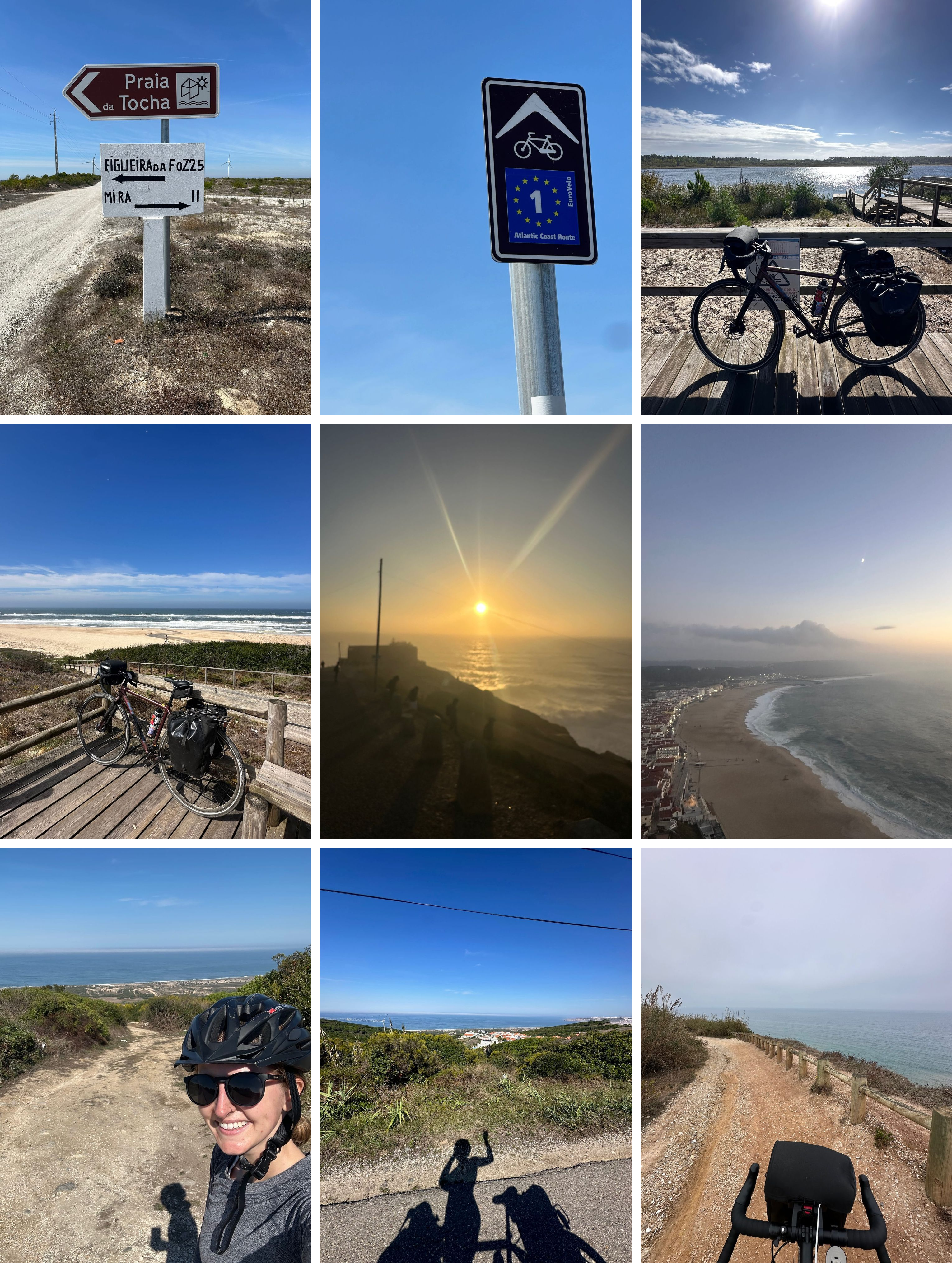
That evening I was sitting in the hostel kitchen with a group of other travelers. There was another bikepacker from Colorado. We were all sharing dinner, telling stories, laughing, and I had this moment where I thought, “This is exactly what I imagined.” I had crushed my miles for the day. My body felt strong. I was in a place I never thought I would go, surrounded by strangers who suddenly felt like friends.
It was not just about the bike anymore. It was about experiencing a country at bike speed, fully immersed. That felt like the dream coming true in real time.
Eight days, six rides, one very heavy bike
Cameron: How long was the trip altogether?
Kaya: The whole trip from Porto to Lisbon took eight days. I rode on six of those days. One rest day was planned after the first big efforts. The other extra day was a spontaneous choice to stay longer in Nazaré because I loved it so much.
The second half was more physically demanding. There was more elevation, and I was carrying way too much weight.
I feel very strongly about this part. One of the main things I will do differently next time is change my packing strategy. The rental company gave me 20 liter panniers, and my brain thought, “If I have the space, I should fill it.” That is terrible bikepacking logic.
My bike was so heavy, completely unnecessarily. Those hills at the end of the route pushed me hard. Thankfully I had mentally prepared myself for a difficult experience. I expected to be pushed to my limit in ways I could not even imagine. Ironically, I think I struggled more on the Swift Campout than I did during most of this eight day trip.
In Portugal my mindset was solid. My vibes were high. I climbed every hill. I did not have a single flat tire. My chain dropped once on a busy state road on a climb, which was stressful, but that was the only mechanical issue.
There were a few other blips, of course, but nothing trip-ending. Overall it felt surprisingly smooth.
The quiet finish
Cameron: So you reach Lisbon. You have just done something that once felt ludicrous. How did it feel at the finish?
Kaya: I had built up this cinematic ending in my head. I pictured rolling into the city with tears streaming down my face, maybe some dramatic song playing in my one AirPod. I imagined hugs, celebrations, some kind of visible marker of what I had done.
Reality looked very different.
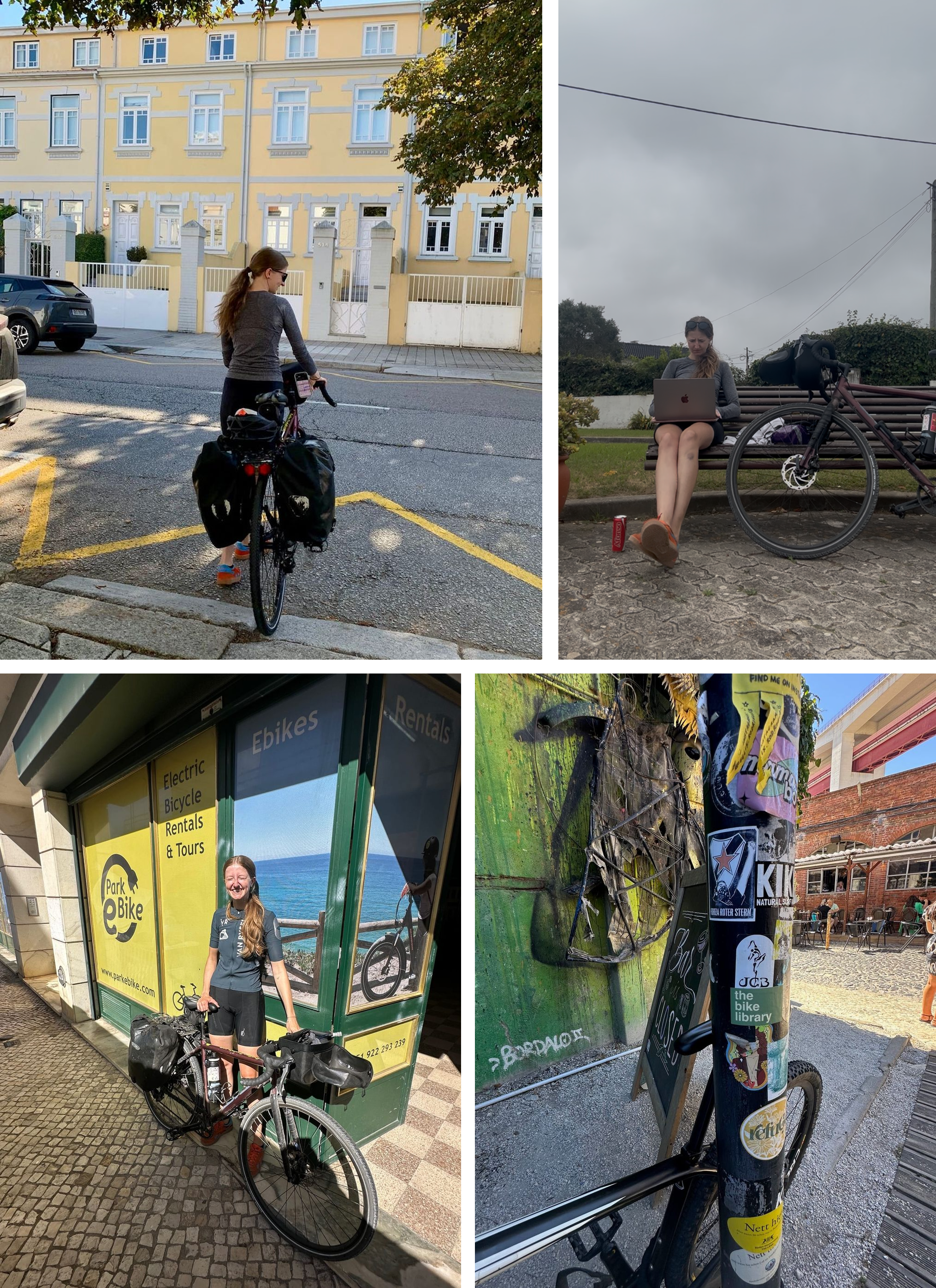
I rode into my final city and went straight to the bike shop to drop off my rental. They had forgotten I was coming, so I waited around outside for a while. When someone finally arrived, they took the bike, said, “Thanks for your service, have a good day,” and that was it.
After that I walked to the library, opened my laptop, and started my workday.
My friends and family back home were all asleep because of the time difference. Nobody was available to call. There was no finish line banner, no medal, no patch.
It was anticlimactic, but in a way that taught me something important.
In that quiet moment, it was very clear that this trip was never about anyone else. It was about me. It was about who I became in the process, not what anyone saw or applauded.
That realization mattered, especially because throughout the trip it was so easy to compare. I knew riders here in Raleigh who casually knock out 100 mile rides every weekend. I met people on the road who had ridden from Amsterdam and were going much farther south than I was. I saw influencers on social media doing outrageously big efforts.
Standing next to them, my little Porto to Lisbon ride could feel small.
But sitting alone after dropping off that bike, I remembered that it was not small to me. It was huge. And that is what counted.
So I celebrated. Quietly, but fully.
Owning your dreams
Cameron: I love that. I have had my own version of that same anticlimactic finish. People who have been there will read this and feel it in their bones. People who have not will still think it is cool, but they will not fully get that inner shift until they do something similar themselves.
To close this out, what would you say to someone - especially a woman - who is sitting on a dream like this and not sure if they are allowed to chase it?
Kaya: I want to invite everyone, but especially women, to really own your dreams. Figure out what they are. Name them. Let yourself want what you want.
Do not let anyone else decide if your dreams are realistic. Do not wait for someone to give you permission. If there is something you want to do with your one life, claim it and move toward it.
Remember that there is almost nothing actually stopping you. Most of the barriers live in your head. That does not mean it is easy. It means it is possible.
That is the lesson that carried me onto that bike in Portugal. That trip is not the end of the story. It is the door. It showed me that I can do things I once thought were impossible. It reminded me that I am allowed to take up space and chase big, slightly wild ideas.
So yes. Own your dreams. And if one of them involves loading up a bike in a foreign country without even owning one yet, I am here to tell you it can be done.