


[Originally published May, 1 2026]
*Thanks to Jacob Rex for this fantastic guest post! If you're interested in having your work featured, please send your piece to greenwaygearcollective@gmail.com.
Genesis
I am on my first long bike ride of spring. It’s a warm, bluebird Sunday in the triangle-themed amusement park of central North Carolina. I whiz by sprouting wildflowers and pollen-starved bees. The sun slowly falls to the horizon as I chug along the Neuse River Greenway. I spent all weekend staring at a computer screen and running errands. This is my time to take out my saturated brain and wring it out in the sun.
Winding down along the river, I get to thinking about how great it would be to have a little pocket radio on my bike rides. I have been slowly unplugging from the internet-ecosystem for the last six months. I have committed to no subscriptions, no cloud services, no social media usage — really just trying to leave as many online services as possible. I want to cut the proverbial umbilical cord tying me to as many tech “necessities” as possible. So far, I have really been enjoying my more analog life.
One of the pillars to fall was music streaming. Seeing the Spotify CEO bragging about his investment in AI murder drones really spoke to me, and what I heard, loudly, was: “Fuck that.” So I ditched the murder-drone-billionaire-AI music company. Instead, I have been using radio apps on my phone. Warm voices from across the world now fill my home as they queue up a human-curated, human-first playlist.
After a while, I thought it would be nice to ditch the phone, too, so I decided to get an emergency weather radio: hand-crank, flashlight, solar charging, NOAA alerts — the full nine yards. It also doubles as a battery bank and Bluetooth speaker.
The idea being I can take it camping, use it in my garage while I wrench on bikes, take it on picnics to the park, but also feel a little comfort as the world becomes more and more unstable, knowing I have alternatives to an internet connection for information. Boy, I have been obsessed with the thing. I have it almost permanently on the classical station in my window. It charges with the sun during the day and rarely needs an outlet.
I love tuning into my local NPR station when I am woodworking or listening to the NC State University station while I cook dinner. I still connect the Bluetooth and use the Bandcamp or Radio Paradise apps with my phone, but the pure radio experience has been fun.
So here I am, pedaling and thinking a little pocket radio on my bike rides would be perfect — just throw it in my bike bag and have company with me the whole ride, no phone needed. Hell yeah. A radio and a bicycle. No algorithm, no micro-transactions; my money isn’t being used to bomb hospitals or pay a pedophile’s salary.
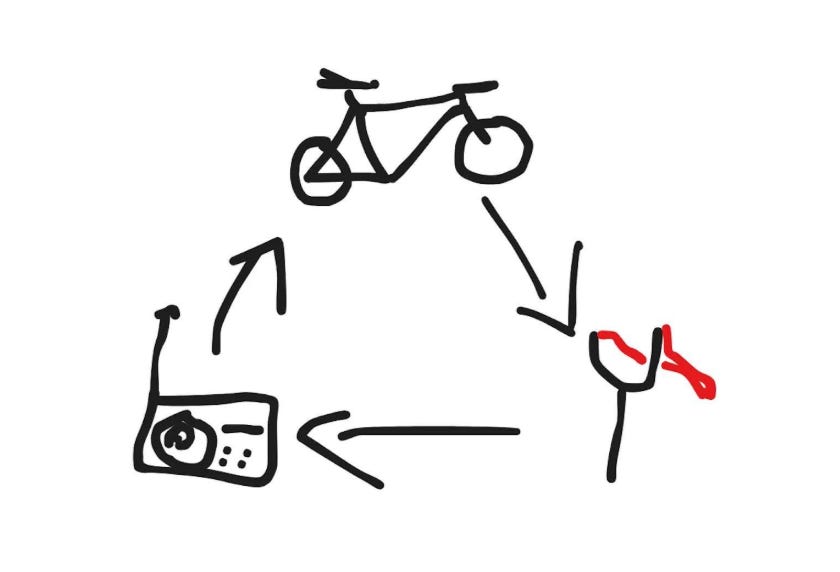
Bicycles and radios are the best inventions humans have ever come up with, I think to myself. In my mind, a new category of godlike objects has just been christened. But I felt this pair was incomplete. It needed one more addition, to make it a trinity of sorts.
These thoughts scratch an itch. Like a plumber snaking a drain, the built up stress clogging my mind begins to give way. I felt myself filled with some kind of latent, punk-rock, Holy Spirit. Suddenly the final ingredient to my trinity is obvious.
Slingshots. Of course, it’s slingshots.
Latchkey Punk
Latchkey kids were left to explore their neighborhoods with little to no supervision while their parents were at work — no tracking apps, no smartphones, no playdates. Being bored was an essential ingredient in character development. My little sister, Halie, and I were latchkey kids in the early 2000s, growing up outside the Smoky Mountains of East Tennessee. Many of our friends had helicopter parents and didn’t let them wander farther than their driveway. Maybe it was because they were too busy keeping their heads above water or they simply trusted us to navigate the world without them, our parents were pretty hands off. While we were young, they cobbled together the money for some cheap bikes and left us to our devices.
While our mother usually dropped us off at school, getting home was our problem. Halie and I would take the bus for an hour to our stop and then walk a mile home. Apparently, not enough kids lived out in the sticks to qualify for a more convenient bus stop. That would change a few years later, when a friend of our parents nearly plowed through a group of kids as she crested a hill. After my mother got a hold of the person in charge of bus routes, a new stop was added down the street from us.
Halie and I often sat together. The name-calling for being in the little kids section was tough, but preferred to being used as a punching bag by my contemporaries. We took turns listening to an old Walkman, swapping discs between Alan Jackson and the “Grosse Pointe Blank” soundtrack. “It’s alright to be little bitty,” we were told through the mesh of the polyurethane headphones.
There are no sidewalks in the boonies. Walking on the road meant getting honked at or nearly getting hit by pickup trucks. So when we got to our bus stop, we would traipse through the woods, jump over creeks and poke the massive hornet’s nest engulfing a mailbox outside of an abandoned house.
Usually, there would be a whole troupe of hillbilly chitlins dropped off at that same bus stop. Together, we’d spend the late afternoon bullying each other senseless or throwing rocks at the herds of incestuous pygmy deer that roamed our little holler.
Once while taking a new way home in unfamiliar woods, the group suggested that Halie and I be left behind as a joke. Kids are real funny sometimes. We were the youngest of the group — or at least the most gentle — and often drew the short straw when it came to who was at the bottom of the totem pole for the day.
The group all took off running through the woods in opposite directions. Halie and I held hands to instill assurance. Was it me or her that was doing the assuring? Despite being the firstborn, it was I who started crying first; it usually was. I sometimes wonder if Halie only cried because I did. Even now, I am not convinced she was all that concerned. As a kid, Halie was quiet and calm. She often chose to listen whereas I chose to speak. I did my best as the older brother to guide us in the direction from whence we came. We boohooed and called out for someone to come get us, our hands clasped tightly. We were greeted by the re-assuring sound of silence.
Through the leaves we would see the sun fall towards the peaks of the distant Smokies. Before it dipped too low, we spilled from the briars and tall pines and oaks onto a quiet road. The tarmac was lit by specks of sunlight that shimmered an amber glow in the late afternoon sun. We weren’t that far from our usual route and managed to get home before anyone could ask any questions. The next day, getting off the bus, our little gang acted as if nothing had happened. Ah, childhood.
During those summers, Halie and I were mostly left alone while our parents worked. The sounds of cicadas and mourning doves drowned out the sound of our parents’ cars starting and driving away. The AC was often broken, and the sweltering songs of a Southern summer filled my room. If it wasn’t the cicadas that woke me up, it was the sweat pooling in my sheets.
Priority No. 1 for Halie and me was cooling off as soon as possible in our local Band-Aid-filled community pool. We rode our Wal-Mart bikes across town to the dilapidated country club that doubled as a community center, restaurant, and watering hole. If we weren’t doing cannonballs or shoving each other into the water, we were taking turns with the Walkman.
On weekends, we would walk through the woods to the coast of a TVA lake to climb fallen trees and build forts from the driftwood and trash that collected in small coves along the shoreline. The wonders of a trash heap were endless to us. We were latchkey kids, but we still had some rules. Swimming alone in the lake was a non-starter for our folks. We heard about kids drowning there every year. If it weren’t for that, I doubt we would have ever gone to the community pool to swim. I for one would have welcomed more days spent along the lake side. There were significantly fewer bullies in the woods.
One summer, my grandfather and step-grandmother came to visit from California and took me and Halie to the county flea market. My step-grandmother is a large Guamanian woman, always in gas station T-shirts with howling wolves or dream catchers on them, her long black hair brushing her flip-flopped feet. At 9 or 10, I was nearly taller than her. She smoked like a chimney and smelled like Camels and fina’denne’.
When I asked if I could buy a wrist rocket, she didn’t look at me at first. She took a drag, let the smoke hang in front of her, and then said, “Sure, baby. Don’t tell ya mama.”
After that, Halie and I would set up bottles we found in our trash cove on fallen logs and take turns trying to smash them. We particularly liked green bottles. There were hundreds of them wedged between logs and buried in the silty lake bed. The most interesting ones still had mystery liquids in them, locked away by rusted caps. When an old Mountain Dew bottle shattered, the emerald shards glinted like fireworks against the mountains.
A mean old lady named Margaret lived alone in a house that overlooked where Halie and I romped around. Once, she had the audacity to call my mother and tell her that I was shooting rocks at her windows. I can assure you, dear reader, this crime was not in my wheelhouse.
When I got home, my mother took the slingshot from me, exclaiming I didn’t need a weapon. From the other room, my father said he had one at my age and suggested I was probably just shooting at bottles. I crossed my heart and hoped to die that I had never shot at Margaret’s house and, knowing that she was kind of a crazy old hen, my mother relented.
Looking at my father, she returned it with conditions: never at a person, never at a house, never at a car. Let me just say it was a bad day to be a Mountain Dew bottle.
One of our other rules during those years was that we weren’t allowed to go back inside until the streetlights came on or until we heard my dad’s whistle. We could hear that man whistle clear across the goddamn county.
Gratefully, our parents did their best to keep Halie and I in the dark about our family financial status. At night, we would crawl from our bedrooms to the top of the stairs to listen to them talk. In between the countdown beeps of Jack Bauer’s 24 we would hear words like “mortgage” and “recession” and long tense silences. We knew he was unemployed because he would kick us out of the house so he could apply for jobs and, probably, weep in peace. To make matters worse, he had slipped a disc in his spine soon after I was born, and by then was in debilitating pain. He was desperate for relief and tried all kinds of wacky remedies that might ameliorate the pain.
Once, I walked in on him hanging from an over-the-door neck traction thing. His face was all smooshed and red. Through the wide fabric of his neck hammock, he managed a pitiful whimper: “I, uh, promise I’m not hanging myself.”
Mostly oblivious to these domestic tribulations, Halie and I would head off into the neighborhood. Sometimes we would knock on doors asking if other kids — the nice ones — wanted to play. We took nothing with us except our bikes, the wrist rocket I had sworn to be responsible with, and the Walkman.
I yearn for that freedom again. To me, slingshots, bikes and radios encompass a category — a lifestyle — hearkening back to a lack of supervision and a desire to explore the world as if it were your neighborhood. Popular cultural fixations like Stranger Things, Super 8 and The Sandlot prove my point.
I reached for a word to describe this feeling — a genre that isn’t solely about nostalgia, but about the future, too. When someone says “steampunk,” you probably think of oversized machines, top hats and dystopia. If I say “cyberpunk,” it’s neon lights, rain and, again, dystopia.
Latchkey Punk is not a dystopian idea, but an alternative to the current world we live in. If we could just stop technology with the invention of the handheld radio, I feel like we’d be OK. If we could ride bikes to our friends’ houses and shoot rocks at glass bottles on a fence instead of grinding and syncing, it might all be bearable.
Slingshots, bicycles and radios — I see that they are genetic cousins, evolved from a common ancestor. Though their genus is now miles apart and their kingdoms split long ago, like bananas, zebrafish and Homo sapiens, we are closer to being kin than we think. The physics that propels a thrown pebble at bone-shattering speeds, the energy transferred to a bike’s crank arm and the sound waves of our voices through the air are all amplifications of our own movements. I feel like Alan Watts might say something like that. Something about the ocean waving and the universe “peopling” and green bottles smashing and so on and so forth.
They are also rhetorical figureheads, symbolizing freedom, self-determination, community and a middle finger to authority and control. A holy trinity of seemingly unlikely comrades, they are also the peak of human design — the zenith of invention. To me, they require no improvements. They are the philosophical “essence,” or “form,” Aristotle tried to tell us about. Everything else is the shadows in Plato’s cave.
Though seemingly different, these three objects unite in a perfect union and represent a mindset — a political and spiritual movement, an awakening for many in this late-stage capitalist nightmare we call home.
Bikes
Bikes, as is well established, fucking rock. There is something spiritual about them — the way you can move through the world on what you carry and what you find. Food, water, a few tools. That’s it. It feels like the cleanest version of motion we’ve managed as a species. Why we invented anything beyond the bike, I will never understand. What started for me as a cheap way to get to class and work transformed into a beautiful medium to connect to the world. A bike has carried me through some of the most important and transformative moments of my life. I have also found that if you’re patient, a bike can get you out of almost any pickle.
I thought about a ride I tried in the early spring of 2024, a solo stretch of the 300+ miles Trans-Western North Carolina route. After two adventure bike races in West Virginia in 2023, I was ready to try my hand at a longer expedition. My trip quickly became more than I bargained for after being attacked by a group of pit bulls. In my flight from their snarls and maws, I tore a tendon in my knee. This injury left me to pedal almost 100 miles to a pick up location on one leg.
My escape route had limited cell service and few reprieves. A monstrous thunderstorm on the second night left me wet, cold and exhausted. On my final day, to add one last snub, it snowed.
The fear I felt at times was real. I was hours away from help, hurt and often without signal. Even though I was never far from a community, I wasn’t guaranteed any comfort from the folks living there. The pit bulls made that very clear. On that trip, my bike felt like my sole comfort. Never once did it do anything other than carry me home, albeit slower than I had hoped.
I limped into a small mountain town, greeted with warm grass and cold ice cream at the general store. Once my rescue team scooped me and got me home, I bought a satellite communicator. Being hurt and without reliable cell service, I had yearned to feel close to people. I also now always ride with some kind of dog deterrent, be it pepper spray or a slingshot.
More than anything, I began to look at my bike as more than a tool for recreation. Like a cowboy whose horse saved him from an ambush, I felt like my bike was looking out for me. We were thrown into the Thunderdome together, and together was the only way we were getting out.
Radios
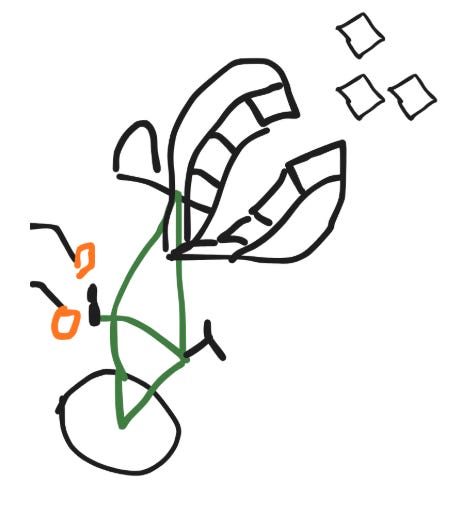
Now, on the Neuse, I give my handlebars a little pat. If I could give my bike a sugar cube, I would. As the path swayed back and forth along the river, so did my thoughts. Feeling appreciation for my bike, my mind turned back to radios and my yearn for the connection I craved on that trip.
They require almost no power, a small solar cell or hand crank can keep them going indefinitely. And seriously, they harness the fucking air. The airwaves are just free to tap into for almost unlimited information and connection. No subscriptions, no AI, no tailored ads — just stories and music and art straight to my ears. I have to tell people about this, I laugh to myself.
Last May, I took a group of college students on an expedition to the Andes in the Jujuy region of Argentina. The area we were in is one of the most remote places in the world. Due to a combination of food poisoning from some bad chimichurri and a student struggling with the elevation, the two of us stayed behind while the rest of the group finished the route.
We stayed in a guesthouse in a village that was only accessible by helicopter or on foot. The Starlink internet we did have was weak or nonexistent. No one in the village spoke English, and my Spanish was mediocre at best. This student and I had little in common. Conversation was scant.
I feigned interest when he pulled out his shortwave radio — that was until the voices from WMOT, my undergrad radio station in Murfreesboro, Tennessee, began to play in our casita.
I was bowled over. He explained that shortwave radios harness the signals playing in the atmosphere and can be picked up from all over the world. We walked into the yard under the star-filled Andean sky and adjusted a massive, wiry antenna until we got a strong signal.
We listened as the world opened up to us.
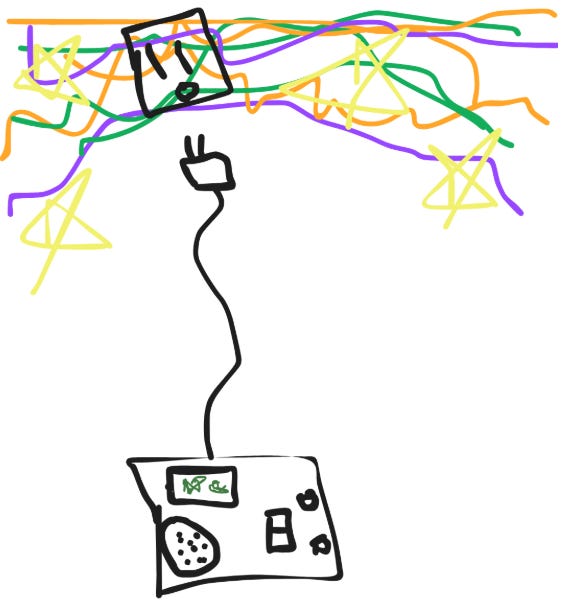
He had a book with some frequency designations. We listened to Chinese cargo ships, church hymns in Chicago and air traffic controllers in Moscow. A brilliant Milky Way floated above us, filled with the signals of a billion people talking to each other. I learned you are never alone with a radio. I looked down at this handheld piece of wizardry and thought: radios fucking rock.
Bikes and radios — they are the pinnacle of community, self-determination, and freedom. Radios offer a low barrier to entry, nearly unregulated (gone are the days of truly free radio…), and no subscriptions — a goddamn miracle in today’s world. They don’t need any more improvements. If you need to, you can build and repair them at home with spare parts. iPhones could never.
Slingshots
You may be thinking, what do slingshots have to do with bikes and radios? The sling, or the modern slingshot, is the OG choice for anyone who wants to scream “Fuck you!” from a distance. It is a symbol of the underdog and nature’s atom smasher. The slingshot is as human as inside jokes and bombing hospitals. It is an invention that is accessible to anyone and is recognizable across cultures. It requires no license or registration or fees (at least here in the good ol’ U.S. of A.), and the ammunition can be sourced from your local creek bed.
The slingshot fills the role of the iconoclast — the rebel, the cowboy, the punk inside each of us. The bike and radio by themselves aren’t enough. For there to be true harmony, there has to be a little bit of good trouble — it keeps the shareholders on their toes.
No matter how much you arm someone with freedom, self-determination, community and all the other good and noble things, if you’re not carrying some kind of stick, some shareholder is going to try to manufacture some consent that no one asked for.
The slingshot is self-determination without outright murder being the first option. Unlike a gun, a slingshot has more of a chance of leaving a nasty bruise than disemboweling someone. A slingshot’s place today is not exactly to fell giants or to bag your next meal (although both are still possible). A slingshot today is both a deterrent and a tool for the civically minded. It is not so much what the slingshot can do, but what it could do.
For instance, if I am camping and a raccoon keeps trying to steal my candy bars, do I need an AR-15 to unload 30 5.56x45mm NATO rounds through him to get him to stop? I mean, maybe, but it seems excessive, no? But a few acorns at 150 feet per second is more than enough. Or, let’s say, if my local corporation is dumping toxic waste into my waterways, could I smash some of their shareholders’ car windows with some crushed spark plugs? Yea for sure, they’re like $5 a piece.
Without the slingshot, our civically minded citizen is defenseless and has no way of letting someone know how they feel about them from a distance.
It tells anyone around who can see it sticking out of your back pocket or bike bag: Go ahead, ask me if I like being controlled — the answer, buddy, is no way, José
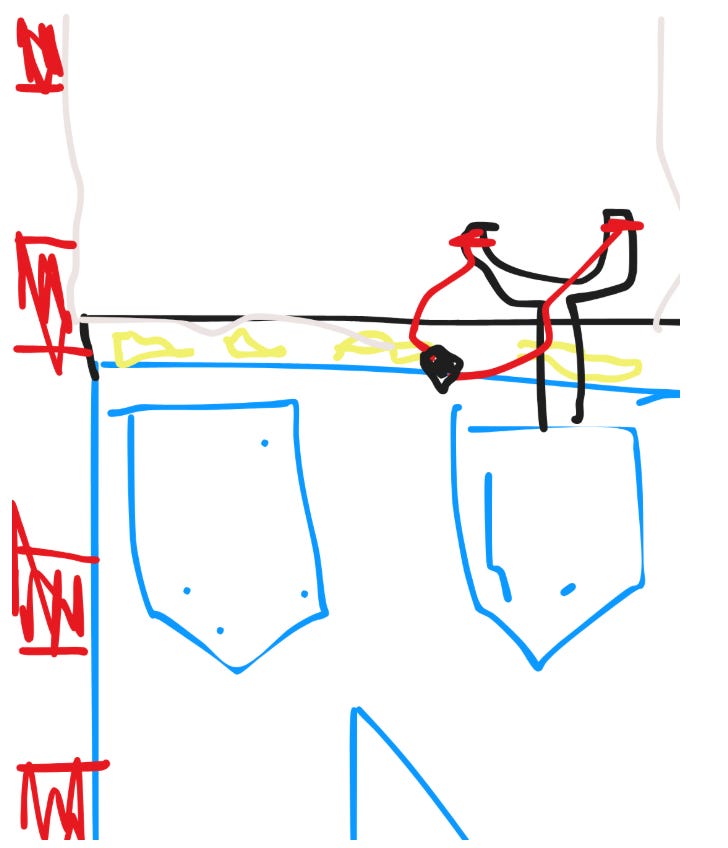
Not to mention that knocking down pinecones from a big conifer or dinging beer cans off a fence rail is a pastime that never gets old.
I’ve met Appalachian Trail thru-hikers who always pack a wrist rocket and some bearings. Once, while working at a local bike shop, a scruffy-looking bike couple came into the shop asking if we had any leftover bearings. When I asked them if they needed bottom bracket or hub bearings, they told me it didn’t matter — it was for their slingshots. They made grapeshot with them to use to scare off squirrels and bike thieves.
If it came down to it, I could use a bike to power a radio. They compliment each other that way. The slingshot, added to the equation, allows me to protect my holy shrine.
Bikes, radios and slingshots are all the same matter in different states — slices of the same pie, layers of the same cake. They are complementary colors; they are different forms of the same Latchkey god. Amen.
Evolution
Despite my excitement, this revelation is nothing new. We’ve been pining for this for a long time, you see. From the moment we first began to walk upright, we gravitated toward this kind of spirituality. We aren’t the fastest or strongest and most of the time we aren’t even the smartest animals. But our throwing arms set us up as top dogs pretty quick. Organizing and talking with charcoal drawings, quipus, and clay tablets were natural next steps in our love of information sharing. Looking to see more of the world we tamed some horses — maybe some donkeys, too. However, even the layperson can see that those three things needed some tweaks.
The timeline of the Latchkey Punk inventions as we know them is simply thus: The sling was the first and simplest of the three — Jesus, a bit of a rapscallion himself, wrote about that one in the Bible. His buddy David needed a way to let the authorities know what he really thought of them from a distance.
Fast forward a few years, and we got bikes when Henry Bicycle invented the bicycle. Legend has it that Henry was a private man. He was sick of people seeing his horse parked at his favorite swimming hole and joining him to chat for hours. Henry sought a more inconspicuous mode of transportation. He found that a bicycle can be tossed in the bushes, leaving the rider to swim alone.
A few years after that — no one really knows when — some scientists invented the radio to talk to the Moon at night because they were lonely. When word got out and everyone tuned in to listen to the Moon, they also heard each other liked that almost as much.
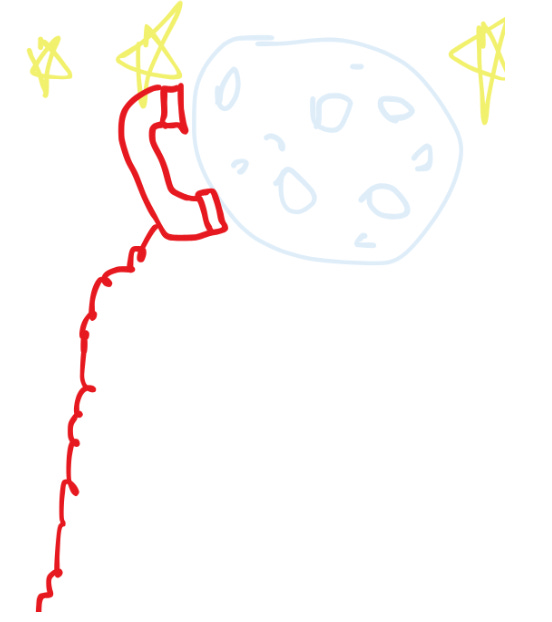
It was at this point they really could have thrown in the towel and had a toast: “To freedom! To community! To self-determination!” they would cheer. Many credible philosophers tell us that if we had stopped there, the world would be much better off. Everyone would ride their bikes around town, feeling the sun on their faces and the wind in their hair. We would have so much to talk about as we gathered at the end of the day — how the flowers are coming in so vibrant this year, and how the rain smelled extra fresh. Then, after all the talking, we would all sit around the radio and listen to Shakespeare, Vonnegut, Mary Oliver, Mozart and our sweet Moon. There would be no need for violence, since everyone carried a slingshot around — and even if someone decided to use theirs, it wouldn’t instantly blow someone’s brains all over the place.
If we had just stayed at that moment in time, everyone would be happy now. But no — Ronald Reagan told Jesus and Henry and the scientists that they had to invent more to increase shareholder value. From there, like Adam and Eve eating from the fruit of knowledge, our perfect creations were modified into horrible abominations as we wanted more and more.
See, the shareholders got lots of money, and they were happy with the whole thing. Slingshots were not very lucrative with their free ammunition and ability to make them at home. So, they turned them into guns. A whole religion sprang up around them and shareholders were really happy to give that religion a whole lot of money to point the guns where they want them to, and they now represent control.
Bikes are also pretty weak when it comes to profit margins. So they bribed the gun worshippers to tell Ronald Reagan to require everyone to own a car and pay for the oil that they also owned. Now, you have to work for the rest of your life to afford the car that you are required to own. Now, instead of riding your bike to the swimming hole, we are told to buy cars. We are told it’s patriotic to run over people we love, dump oil into rivers and creeks and oceans, smog up the clouds and make cities a place that humans no longer belong in. So the bikes, which were all about freedom and choosing your own fate, became cars and are now all about control.
Lastly, the shareholders said radios weren’t good enough. “Who wants to talk to the friggin’ Moon?” they said. They wanted to use radios to sell more guns and cars. They wanted us to be addicted to buying guns and cars and to tell us that this was all good for their gun religion and good for us, so they invented the internet. Now everyone can talk about how much they love guns and cars, and we can no longer hear the Moon with all the hatred in the sky. The radio, which was once about community, is now the internet and is all about control.
So now the fix is in and shareholders are owed all of the money and tell us what freedom is and the government can bomb more hospitals and abuse more little kids without anyone asking too many questions.
Curtains
Towards the end of my bike ride, I can see, through the piney woods, a sky that was starved for attention. I haven’t been out to see it in some time. The whole forest was a warm rose. The swirling blue and gold background of the sky looked like pillowey fish floating between the trunks. Bird songs swirled around me like doorbells and dog whistles. I felt a bit ashamed I had been hiding from that sky. The last six months had been spent behind computer screens.
When someone dies young and out of order, what little they own is quickly given away or donated. For most of human history, when a living soul is no longer around to usher their story along, it is inevitable that the lives they left behind will blow back into the sky like sea spray. There was a time when that was that — a time when the memories might be all we kept of the departed. The effects left behind could be dispersed among family and friends for keepsakes. Their souls could rest, and that rest, I figure, was about the only upshot to crossing over.
Now, thanks to shareholders, souls are broken up and stored in company-owned machines. Every email, every post, every keystroke, every meme liked is a tiny part of someone that is now all owned and controlled by people who never knew them. Every drop of data we create has a little asterisk next to it: *Property of Meta or *Property of Alphabet. If you think, for even a second, about not handing over your monthly subscription, they will lock away your loved one’s digital soul for eternity, Roko’s Basilisk style.
When Halie was killed by a drunk driver in 2024, I was handed the keys to her digital soul. I just assumed that since I had the login information, the little shards of her online life would stick around. About eight months after her death, Meta permanently locked Halie’s Facebook account with no warning. Any bits of herself on that profile are trapped like a horcrux and owned by one of the least human entities to slither upon the Earth. I read Halie’s eulogy and laid her remains to rest. The fact that I cannot lay that small portion of her to rest myself, keeps me up at night.
Halie was in a coma for five days before I watched her die on the night of a full Moon. Inconveniently, there was never a moment where I could ask, “Hey, little sis, I know you’re really busy right now, but what do you want me to do with the thousands of gigabytes of texts, notes, photos, messages, and hopes and dreams you have on the internet?”
The police station released to me everything she had on her person when she was hit: her black shoulder bag, with her golden hair clip still clamped to the strap; her wallet, with her two-month-old East Tennessee State University graduate student ID in it; the crumpled hat she had in her bike bag, a mountain and the words “VERMOT” embroidered on the front. When the officer handed me her iPhone, my stomach lurched. I didn’t know her passcode.
The only thing they wouldn’t release at the time was the bike she was riding. I was able to see it, but they were keeping it as evidence for a few more weeks. The bike was being stored with the car that hit her. A white Honda Civic, with the front window smashed in the shape of my sister, was parked next to the bike we had built together only a few months before. Her rear tail light was still on, a dim, blinking red in that dark, suffocating garage.
The week of Halie’s funeral, my friends and I moved everything out of her apartment into my parents’ basement. We spent every day that week organizing her things into piles of keepsakes and donations. Her phone and MacBook haunted me. I did not know her passwords and was paralyzed with the thought of never being able to open them.
Preliminary research made it clear that Tim Apple, no matter what, would not let me in. He owned that part of her soul.
Halie left a password hint on the laptop that puzzled me for days. Only after talking with some of her friends from her time teaching English abroad did a phrase appear to match the hint. I had the phrase — but had she used numbers? Symbols? Capital letters? I didn’t know. Two attempts, using her birth year or birthday mixed in, were met with warnings of being locked out.
I imagined myself, in my 80s, still holding on to her laptop with the faint hope that I could get into it one day — imagining the notes, voice memos and photos I would never get to see. I saw myself on my death bed, yearning to hear her voice again, to read her poetry, to know what was going on in her life that last day. My heart broke all over again.
On a walk the night before the funeral, I stopped at the spot we came out of the woods when we had to find our way home. It was the end of October, and a half Moon was lighting up the woods in a pale blue silhouette.
What was I losing if I could not get into her digital soul? Would it make the pain any easier to bear? Would she want me to have that kind of access? Did I really know Halie if I couldn’t guess her password?
I closed my eyes and let the guilt and rage and sorrow burn a hole through my stomach. I looked up at the Moon. The answers to these questions, as it would turn out, mattered little.
The answer to her laptop password hint dawned on me as I stared up at those familiar Southern stars. I suddenly knew what it was. Like some voice from far, far away whispered to me that I knew damn well what her password was. I walked back home, like we had that day almost 20 years ago, and unlocked her laptop — and, with that, a part of her soul.
The preceding week at the hospital, we all realized that Halie had temporarily deactivated her Instagram account — presumably to decrease the time she spent online. There was no way to access a single photo on her cloud accounts. We all knew she had poetry and journal entries on her Notes app. All of this, at the time, was lost forever.
I would look at her on the hospital bed, her chest rising and falling with the whirring of the ventilator. I would watch the numbers that showed the swelling in her brain slowly, but surely, rise. Then I would look at the phone in my hand that had her voice, the files that had her words.
I was grieving two deaths at once.
My friends were gathering up what they had digitally of Halie to send to me. It was a kind gesture, but it was a meager consolation compared with what I knew lay behind four secret digits.
As I had hoped, access to Halie’s laptop and that master password gave me instant access to everything — every password to every account, to every scrap of data she created. If she had it digitally, I had access to it.
Her iPhone had last backed up at 1 p.m. Oct. 12 — eight hours before she was hit by a drunk driver running a stop sign and would never wake up again. When I reset her phone and restored that backup, it was only those eight hours that were missing. She took those with her.
Halie was a private person. Whether she would approve of my access, I don’t really know. On one hand, I know she would want to ease my pain. On the other hand, you don’t need to know everything about a person.
It would take more than a year and a half to go through it all.
The first thing I did was listen to a voice memo. In it, Halie is walking the streets of Crosshaven, Ireland, reciting a haphazard poem to herself.
…no one in Ireland seems to have curtains/
each house covered in windows/
…is it that they trust each other/
to not let curiosity get the best of their neighbors/
…there is something so sweet/
and honest about a country with no curtains
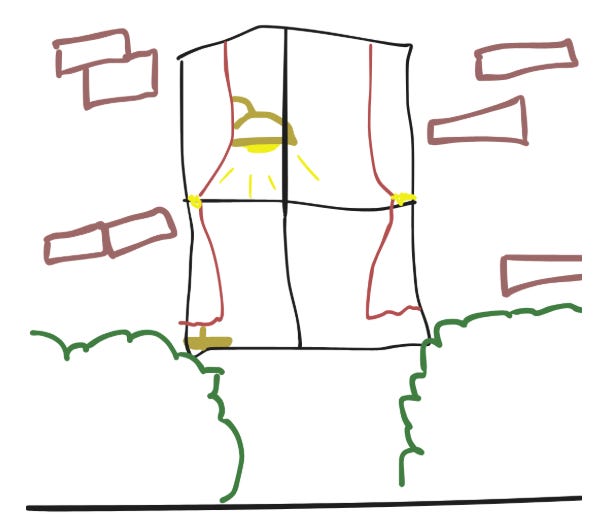
Activating her Instagram was met with a wave of calls and texts from friends — each happy to have their own small piece of her life returned to them. Photo albums could be made and shared with friends and family. Bank accounts could be closed. Distant friends could be notified.
There was a lot to do.
From there, I knew I had an important but monumental task. I needed to keep these little bits of her soul safe. The responsibility of what to keep was almost as daunting as deciding what to delete. Doing my due diligence, I needed to know what I was working with.
This ride today signaled some of the last days of a months-long project. I have gone through hundreds, if not thousands, of gigabytes of my sister’s life. I worked across multiple devices and platforms. I organized, cataloged, cleaned up and backed up every text, photo, voice memo, note and email she ever created.
I became a Halie historian.
Every photo and its metadata, every navigation request on Google Maps, showed me a timeline of the last 10 years of her life. I discovered that the data companies keep and can export is both wonderful and sickening. Before setting off on this bike ride, I completed my first hard-drive backup for safekeeping. I whittled her digital world down to 300 GB of files.
My timeline for this project, at first, was years. I figured I had time to go through everything now that I had her passwords. However, when I saw that Meta had padlocked her Facebook account, I felt panic rising in my chest. What else might get sealed away in some secret server that I can never reach?
Securing the rest of digital Halie became a race against a clock I could not see.
In a period of months, I saw 11 years of her digital life unfold before me. Sometimes, I couldn’t do it. Often, I spent hours just re-listening to voice memos or watching her videos to hear her voice, to hear her laughter. Other times, an email might cause me to weep to exhaustion.
But most of the time, I would stay up late, night after night, exporting data, reviewing it, naming it, organizing it and copying it to drives and laptops so that the only people who control her data are her people — and not a shareholder or soulless technocrat.
The Bean-Field
At the same time Halie and I were playing in the hills and valleys of the Blue Ridge, we were devouring books. The bullying might make more sense as I go on.
As teenagers, we stumbled upon Thoreau’s Walden. The book would inspire both of us to become vegetarians. While I dropped the diet after a few years, Halie maintained it until the end. It was the first of many books we would bond over through the years — from Kerouac and Plath to Oliver and Hemingway.
Halie became a die-hard “Vonne-guy” in her final years, tattooing “So it goes” on her arm in an effort to remind herself not to take life too seriously. Books connected us until the end. The day before the accident, while on the phone for the last time, we laughed as we realized that we had coincidentally been reading the same book about owls.
Now, as I write, I think about our first literary connection, Walden. We had our own annotated copies and I keep Halie’s on a shelf in my bedroom. Although the exact philosophies and creeds we would abide by would evolve separately, Thoreau’s craving for simplicity and his search for deeper meaning by paying attention to the world became the foundation for both of our lives.
I cannot tell you why I felt compelled to write all this down. I was more than a little possessed. I have a backlog of other things I want to write about — stories that are probably a little more interesting than radios and bicycles and slingshots. Every time I open my garage, Halie’s bike is there to remind me. When my radio plays an old country tune in the warm sun, I hear her voice asking me to swap the CD. When a car honks at me on my bike as they drive by, my fingers itch for a way to tell them what I think of them. The Holy Spirit of the Latchkey Trinity must have been sending me a message through the air and vibrations that connect me to Halie.
In a way, this is my ode to the analog — my carnal desire for the simple and utilitarian, for a world that feels like it might have kept my little sister alive.
In the chapter “The Bean-Field,” Thoreau writes about his path to deliberate living. His small plot of farming land, where he planted, among other things, beans, kept him close to the earth. The soil and birds and weeds kept him humble and aware of his world. He toils for weeks and yields questionable results, which only focus his feelings of love for the world.
His toiling he likens to that of Ascetics staring into the sun and depriving themselves of pleasure to sharpen their spiritual aptitude. Although, I don’t think the Ascetics’ mommies were making their lunches and doing their laundry like Thoreau’s was. I suspend my disbelief for the principle in this case.
Picking up my life in Halie’s absence has been one thing. There is nothing I can do for the emptiness but grieve and commit to seeing the sun rise again.
Having to shepherd what she left behind — that is my bean field. My deliberate life now is to ensure that what is left of her is cared for by those who loved her most.
After I put my bike back in the garage, I check the status of my data transfer. Complete. A customized hard drive of the best of Halie Ann Rex, ready to be shipped to our parents.
My recurring nightmares often have to do with the morning I got the phone call. Picking up the phone, driving hours to the hospital, walking into the ER. When I saw her, intubated, bloody, and limp, I took her hand and told her I was there. Her hand gripped mine as if she was letting me know that she knew I was there. It might be the last thing she ever told me in person.
Though I am troubled by the occasional Halie-themed nightmare, I sleep a little better at night now. I know her remains are home, where I laid them to rest. I know that her digital keepsakes are going to be cherished and protected.
I know her bike will be cleaned and maintained and ridden, almost entirely out of spite.
I know I will keep tuning in to the airwaves flowing through the Milky Way, listening for the Moon to talk to us again.
I know on the edge of a shrinking stretch of woods, mixed in with the iron coated shale and limestone coast of our lake, are little pieces of green glass, worn smooth over time under the gaze of the Smokies.